
Differences in Performance between Polyurethane Soft Foam and Hard Foam
Release time:2025-05-22 19:20:24 author:Xingtaiyourui Click through rate:188
The performance differences between polyurethane soft foam and hard foam are mainly reflected in their molecular structure, physical properties, and application scenarios, and their fundamental differences stem from the adjustment of design and process parameters in multiple regions.
1. Molecular structure and crosslink density
Soft foam: using long-chain flexible polyols (such as polyether polyols) and lower functional isocyanates (such as TDI), with low crosslinking density, molecular chain segments can move freely, giving the material good elasticity and flexibility.
Hard foam: using short chain or high functional polyols (such as sucrose polyether) and rigid isocyanates (such as MDI), with good crosslinking density, molecular chains forming a tight rigid network, and strong structural stability.
2. Mechanical properties
Soft foam: has excellent resilience (rebound rate>50%), can recover quickly after compression deformation, but has low compressive strength (usually
Hard foam: high rigidity, compressive strength up to 200-500 kPa, but almost no elasticity, easy to crack under stress, suitable for structural support (such as building insulation boards, refrigerator interlayers).
3. Density and Bubble Structure
Soft foam: The density is usually 20-100 kg/m ³, the porosity is>90%, the breathability is good, but the insulation performance is poor.
Hard foam: density range of 30-200 kg/m ³, closed cell rate>90%, independent cell closure, providing excellent thermal insulation (thermal conductivity of 0.018-0.028 W/(m · K)).
4. Thermal performance
Soft foam: Poor heat resistance, long-term use temperature generally does not exceed 80 ℃, and is prone to softening and deformation at high temperatures.
Hard foam: It has good heat resistance, and some modified hard foam can withstand temperatures above 120 ℃ (such as PIR hard foam), making it suitable for insulation of high-temperature pipelines.
5. Chemical stability
Soft foam: Polyether type soft foam is resistant to hydrolysis, but easily degraded by ultraviolet radiation; Polyester foam has good mechanical strength, but is prone to hydrolysis.
Hard foam: The closed cell structure makes it more resistant to water and chemical corrosion, but aromatic isocyanates (such as MDI) hard foam are prone to UV aging.
6. Processing technology
Soft foam: block foam or molded foam is commonly used, with a mild reaction time (milk white time 30-60 seconds), suitable for complex shape molding (such as car seats).
Hard foam: commonly used for spraying, pouring, or sheet forming, with a suitable reaction speed (milk white time 5-20 seconds), requiring high-pressure equipment to mix raw materials.
7. Typical Applications
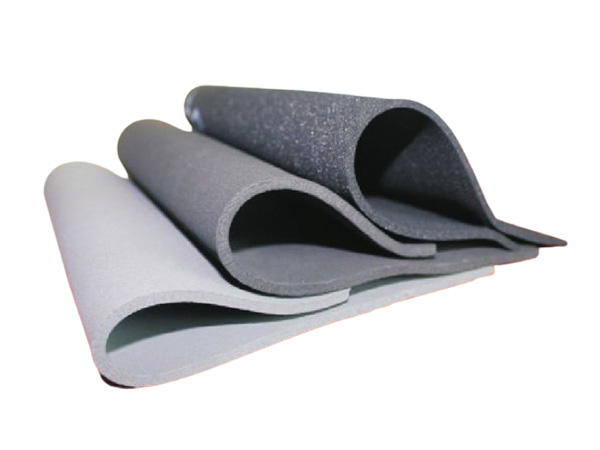
Soft foam: furniture cushion material, sole, packaging buffer, car interior (high rebound foam).
Hard foam: building insulation, cold chain logistics, wind turbine blade filling, electronic equipment insulation.
Summary of Core Differences
The core of soft foam is "softness" and "elasticity", relying on the flexible design of molecular chains; The key to hard foam is "rigidity" and "stability", achieved through high cross-linking density to achieve structural strength. The difference in performance between the two is essentially the result of molecular engineering, which achieves directional control by adjusting the isocyanate index (NCO/OH ratio), foaming agent type, and catalyst system.
Other information
-
Differences in Performance between Polyurethane Soft Foam and Hard Foam
The performance differences between polyurethane soft foam and hard foam are mainly reflected in their molecular structur...
-
What should I do if there are uneven bubbles during the polyurethane foaming process?
The problem of uneven bubbles during the polyurethane foaming process directly affects key indicators such as insulation,...
-
Aging mechanism of polyurethane foam materials
The aging of polyurethane (PU) foam materials is a complex process involving multiple factors, including chemical structu...
-
The molding process of injection molded foamed polyurethane products
Injection foaming polyurethane (PU) products are a process combining injection molding and foaming technology, mainly use...
-
The application industry of polyurethane foam materials
Polyurethane foam materials are widely used in multiple industries due to their excellent properties such as lightweight,...